Nature Walks Group: Looking at exceptional trees in one of the UK’s first arboretums.
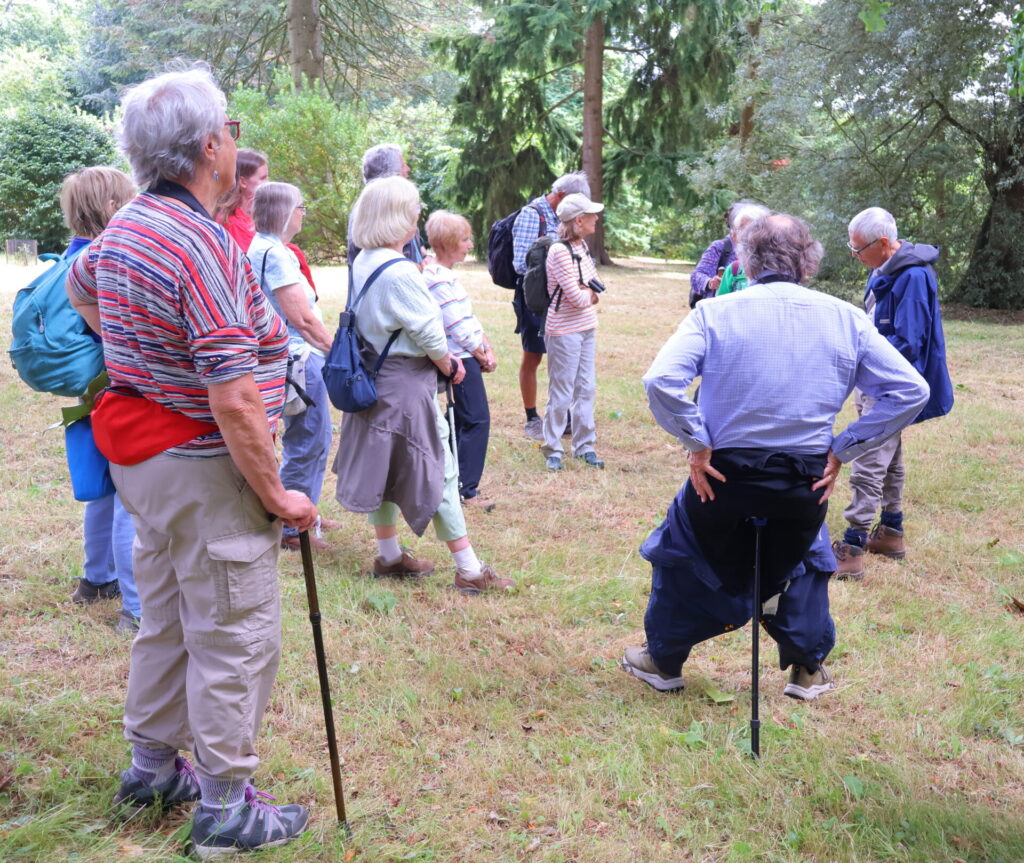
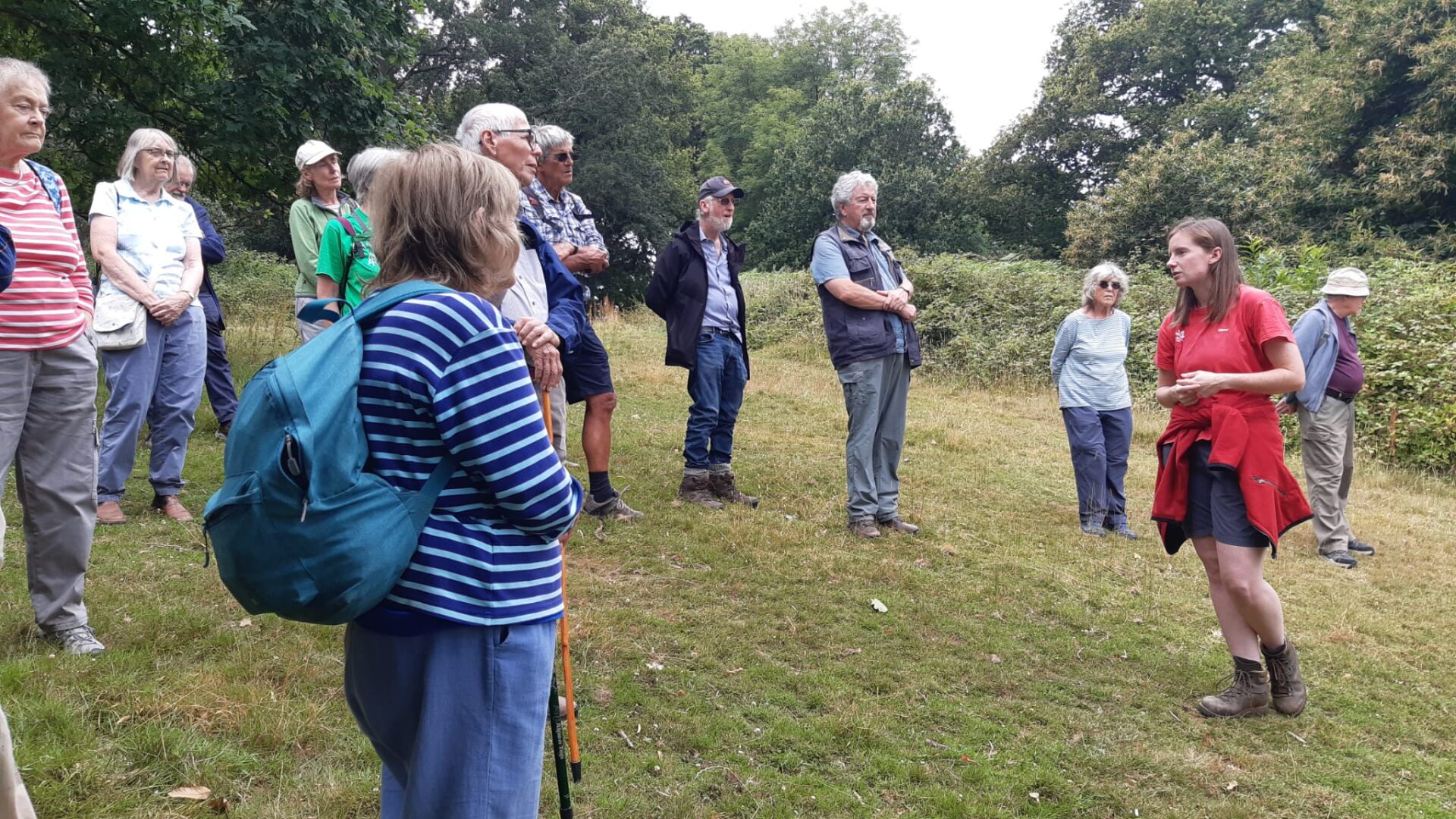
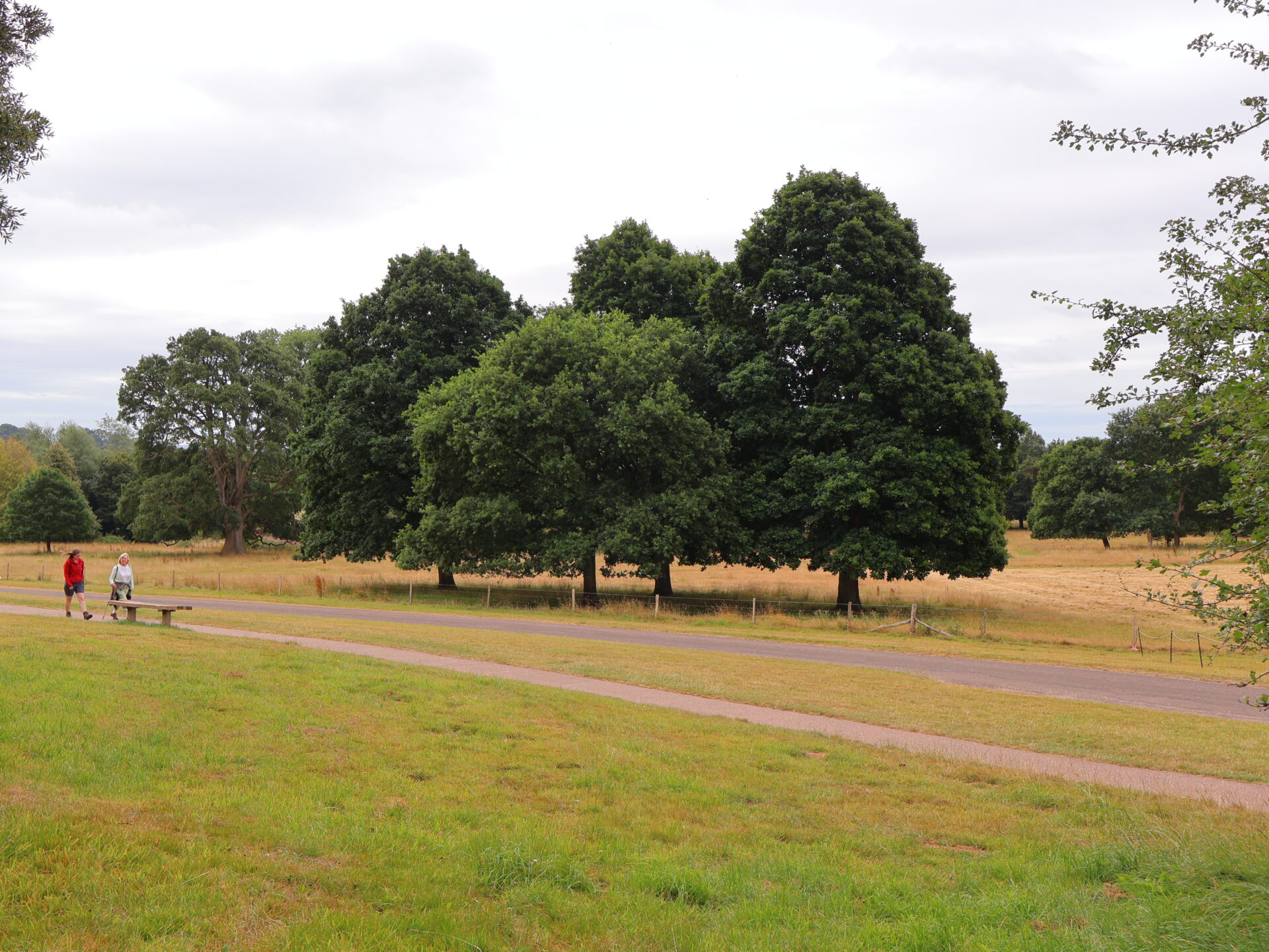
Nature Walks July outing was to the National Trust’s Killerton Estate to visit the parkland and to look at some of their exceptional trees in one of the UK’s first arboretums, which contains 9 (or possibly 11) UK Champion Trees.
Our expert for the morning was the renowned Jill Butler who in 2020 was awarded the Arboricultural Association Award for the positive contribution to the arboricultural profession, amongst other accolades she has received. You’ll find out much more about her from the link below. Her friend Fi Hailstone, an ecologist and Nature Officer for Killerton, assisted Jill with the more technical questions and recent history of arboreal work done on the estate.
Jill Butler wins 2020 Arboricultural Association Award - Tree Care Supporters
Jill led us first to the ancient Sweet Chestnut tree near Killerton house, measuring it with a rather long tape measure to find out its girth which gives an approximation of its age, giving us a figure of over 400 years old. Next was the large birch tree that was growing out of an ancient Hawthorn tree with only the trunk and not much else left of it.
It was good to see there has been some recent planting of trees and I wonder if they will grow, age and become beautiful trees like one of the oaks we saw which had been planted in Henry V111 reign. So over 500 years ago.
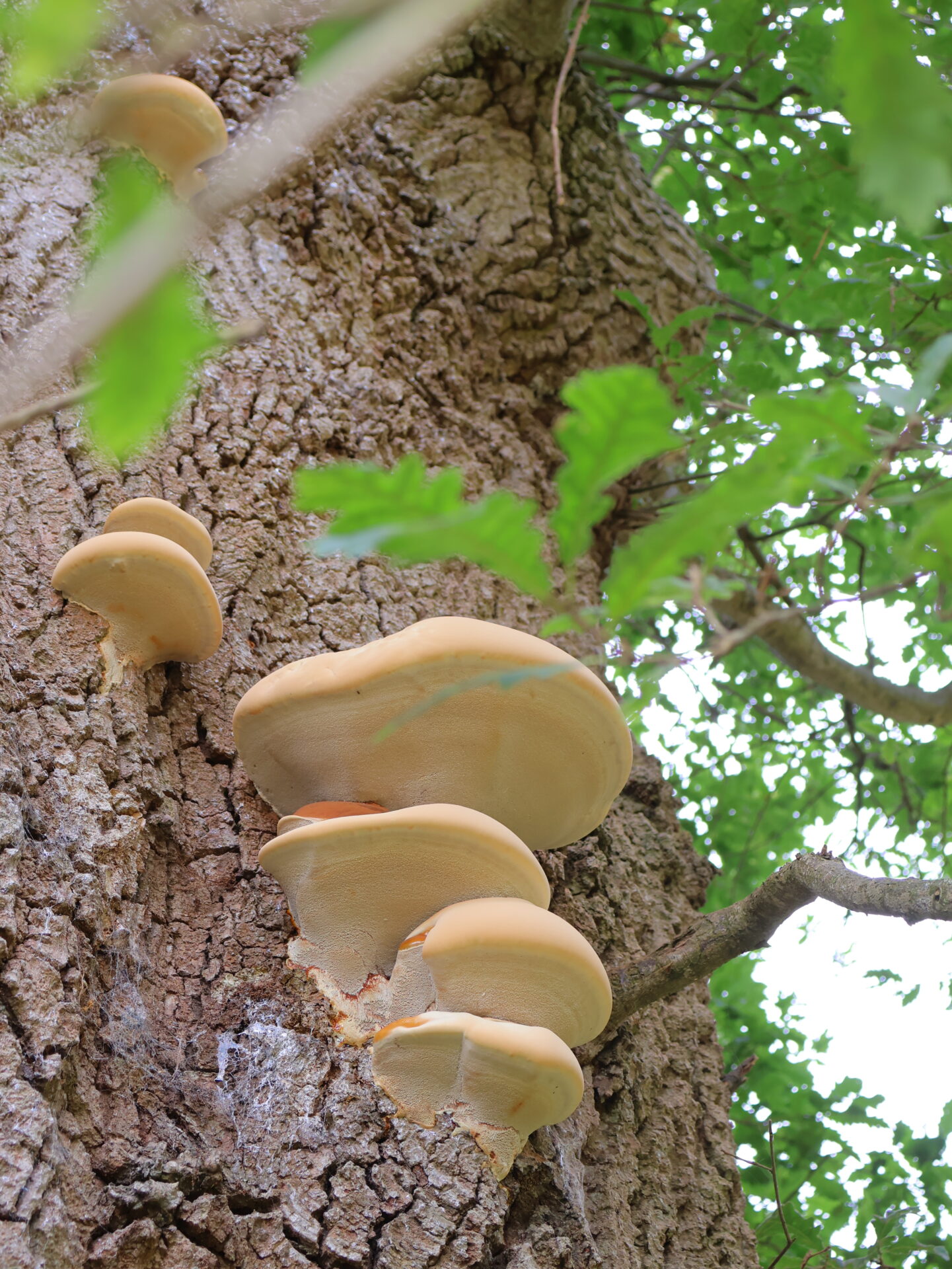
Oaks are an important tree in the forest. According to The Woodland Trust it supports 2,300 species (insects, birds, bats, lichen, butterflies, etc, and 326 species are dependent on it.
Jill gave us an excellent morning and whetted our appetite to see and learn more of the Killerton trees. A few of us finished off with a visit to the cafe before driving home hoping to avoid any complications due to the road closure at Poltimore which some members faced when coming.
Thank you for persevering. I think you found it worthwhile in doing so.
Janet Fernley
The Champion Trees of Killerton
- Castanea × neglecta (hybrid Chestnut)
- Liquidambar formosana (Formosa sweet gum)
- Liriodendron tulipifera (American tulip tree x 2)
- Magnolia fraseri (Appalachian magnolia)
- Magnolia macrophylla (Bigleaf magnolia)
- Ostrya carpinfolia (European hop hornbeam)
- Quercus x hispanica 'Crispa' (Spanish oak/New Lucombe oak)
- Stewartia pseudocamellia (Japanese stewartia or deciduous camellia)
- Xanthoceras sorbifolium (Shinyleaf yellowhorn)
- Taiwania cryptomerioides (Coffin tree)
Click on any image to enlarge the picture and start the slideshow